

I brought 50 engineers to our offices, and not a single one was there for an interview

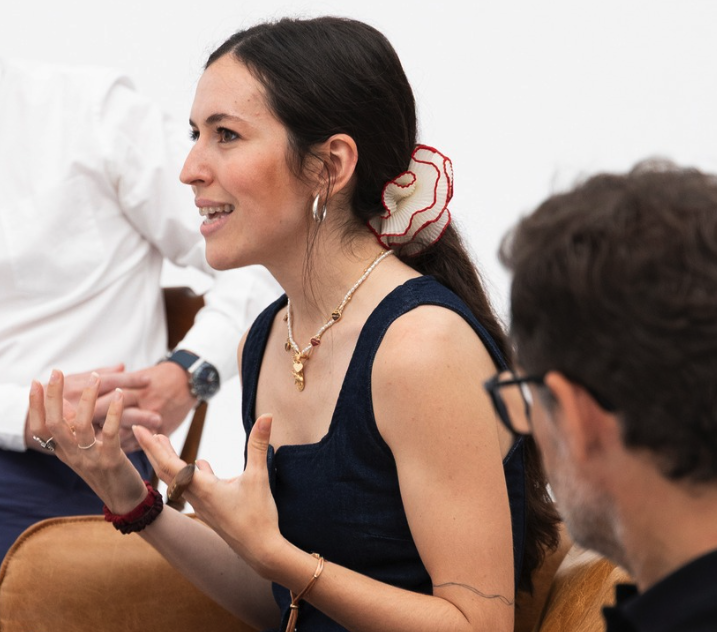
If you’re here, it’s probably because you’re interested in tech talent, so you’ll know how difficult it is to attract these candidates in a market characterised by a shortage and high demand.
Well, today we’re not going to focus on the shortage or the demand for these roles. We’re going to talk about how to get them interested in us. About how to go from being completely transparent and invisible to making someone think: ‘Wow, I didn’t know this company did this; I wouldn’t mind working there’.
There’s no magic trick behind it. It’s called communication, and it’s also called building your employer brand. We can’t expect people to know about us if there’s no online presence or platform where we tell the world who we are. If nobody’s talking about us beyond a job advert posted a few times a year, it’s hard for anyone to have us on their radar.
What I’m here to tell you today isn’t how to develop an employer branding strategy. What I’m here to tell you is how, whilst working at a company with over 6,000 employees and a significant demand for tech talent, I managed to bring more than 50 highly experienced engineers to our offices – people who’d simply come along for an afternoon of networking and ended up falling in love with the company (without even realising it).
As I was saying, in the tech world we’re desperate to attract talent, to reach out to the best candidates and give them a thousand reasons to say yes to our company. The problem is that they’re often content where they are, don’t want to change, or have fifteen other options on the table, so they don’t even give you a chance.
But what if, in a more discreet way, we managed to connect with all those who aren’t looking for a change, but who might well be interested in finding out about other projects?
If there’s one thing we’ve learnt in recent years, it’s that tech talent wants challenges, wants technology, wants flexibility and wants a great company culture. And often, in a phone call or an InMail, we’re not able to convey that.
Because it’s one thing to say you have an incredible company culture.
It’s quite another for someone to experience it first-hand and see for themselves.
What if we marketed it in such a way that they discover it for themselves?
Well, that’s exactly how I did it. Through that magic of Employer Branding I mentioned earlier, we managed to get more than 50 engineers with experience in Cloud, Blockchain and Kubernetes to come and spend an afternoon at our offices, learn about our projects and have a beer whilst discovering what it was really like to work there.
And then something interesting happened:
People started walking around the office.
Talking to the teams.
Asking questions like, ‘What are you building?’
Listening in on conversations about real problems they face day to day.
And little by little, they start to ask themselves a question that hadn’t crossed their minds when they walked through the door.
“What if I worked here?”
And just like that, as Carrie Bradshaw would say, you turn your company into a place that no longer seems as unattractive or invisible as it initially did, and it becomes:
“Actually, if I were working on these projects, I might consider working there.”
But it doesn’t stop there, because without follow-up, we’ve achieved nothing.
After all, when you’re looking at a flight, doesn’t the airline remind you that if you buy your hold luggage now it’ll be cheaper, that there are only a few seats left, or that the offer ends in a few hours?
Well, exactly the same thing happens here.
That’s where you come in, recruiters.
Reaching out to all those people who’ve been captivated. Asking them what they thought of the event and the projects, and why they might be a good fit for us.
Because when someone has already connected with your culture, the conversation changes completely.
You’re no longer trying to persuade them via an email or a phone call. Now you’re continuing a conversation that’s already begun. And whereas before you were starting from scratch, now you’re at 50.
And this is where the same question always tends to crop up
“Right, Sandra, but that only works if you’re a powerful brand. How do you attract 50 engineers to your offices if nobody knows who you are?”
The answer is simple: tech communities.
There’s always someone out there for everyone, and I can assure you that there are plenty of tech communities that support their own members – and yours. And if not, have a word with me and I’ll share a couple of tips on how to find the one that suits you best.
Because, at the end of the day, tech communities simply fulfil a very human need: to connect with others, learn from them and open up potential new opportunities. Sometimes we think people go to a meetup just to learn about the Cloud, Kubernetes, Blockchain, AI or whatever the latest buzzword is, but the reality is that they often go because they want to feel part of something, or simply because they need to discuss a problem they’re facing in their day-to-day work with someone who speaks their language (SQL).
Technology changes so quickly that it’s hard not to feel as though you’re always lagging behind. A new tool, a new framework, a new methodology or a new AI model comes along, and it seems as though everyone is already using it except you. And although we know that this feeling is often unfounded, it’s still there.
Recently, whilst out for a walk with some friends who work in tech, I asked them how they’d met. Their answer was simple: at a digital transformation and AI event. As we chatted, they told me that they used to keep up to date mainly by reading Reddit, but that now they often consume content on TikTok because everything moves so fast that it’s the easiest way to find out what’s going on. And yet, they still go to events.
Because one thing doesn’t replace the other.
Communities help to counteract that feeling of always being one step behind. They allow you to hear how other teams are solving specific problems, what technologies they’re using, what mistakes they’ve made and what’s working for them. They allow you to put all the noise on social media into context and understand what’s really happening in the market.
And this is where we as companies have a huge opportunity
Because when you build your brand and collaborate with a community, when you provide a venue for an event, when you share knowledge or simply help people to connect, you stop being a company that’s just trying to recruit staff.
You become a company that adds value to the sector. And I can assure you that the difference is enormous.
And this point is fundamental. It’s one thing to talk about our projects and show what we do. It’s quite another to have our recruitment agenda laid bare from the very first minute. That doesn’t work; in fact, it often generates rejection.
It’s in those little details that you see the culture. You see the intention. And that’s where many people decide whether to think ‘how interesting what they’re doing here’ or ‘no way, Begoña’.
Because nobody wants to attend a sales pitch disguised as a meet-up. Nobody wants to be sold a company for three hours. But people DO like to find out about interesting projects. They like talking to people who are building things. They like discovering how other teams work.
And when that happens in a natural setting, without pressure and without a job offer ticking away right in front of their eyes, the barriers disappear.
You’re no longer the company that messaged me on LinkedIn. Now you’re the company that organised that interesting event, and what they were doing looked rather good.
The company where I met a couple of people with whom I had an interesting conversation and where, as it happened, I got on quite well with the head of the department. Well enough to think that perhaps one day I might ask him what it’s like to work there.
The company where I discovered projects I didn’t even know existed, let alone that they were developing them.
And even if that person isn’t going to change jobs tomorrow – because branding, my friends, can be that short-sighted at times – when they decide to explore their options in six months’ time, guess who’ll be on their mind.
Probably not the company that sent them five messages in a row on LinkedIn.
Most likely the company that managed to create a positive experience long before it needed to hire them.
And if you’re wondering whether this actually worked or whether I’m just spouting some fancy talk about employer branding…
The answer is yes, it did work.
Professionals from different companies and sectors attended that event. It wasn’t just us talking about our projects, because the idea wasn’t to turn it into a sales pitch for the company. We wanted to create a space where people could learn, share knowledge and get to know others in the community.
That said, we made sure to take care of every detail. From how we welcomed people to how we presented the projects, including who took part in the talks and how we connected people with one another. We wanted the experience to be worthwhile regardless of whether someone wanted to work with us or not.
After the event, we got in touch with everyone who had attended. And interestingly, quite a high percentage decided to start a recruitment process with us. This led to several hires, but the most interesting thing is that we’ve continued to maintain a relationship with many of the people who didn’t take the plunge at that time.
Because not everyone is ready to change jobs today, but that doesn’t mean they might not be in six months’ time.
What’s more, I made sure to gauge the value of this event to work out whether it was worth repeating or whether we’d simply been lucky. And the feedback was incredibly revealing:
“I didn’t know you did this here.”
“It’s fascinating what you’re building.”
“I’m amazed by the sort of projects you’ve shown us.”
“What’s it like working here?”
“Is the atmosphere always like this?”
And dozens more questions that demonstrated something very simple: they’d come to a technical event and left with a genuine interest in the company.
But there was a second surprise that, for me, was even more important. (And one that always takes a back seat)
All the teams involved in organising the event, especially the technical teams at my company, felt proud.
Proud that their company was committed to creating spaces like this.
Proud to be able to show what they were building.
Proud to be the ones telling potential future colleagues, contacts or friends about their day-to-day work.
And that, although we often don’t measure it, is also part of our employer brand. Because this isn’t just about attracting people from outside.
It’s also about ensuring that the people who are already here feel a sense of belonging to the place where they work. About giving them reasons to feel proud and making them feel that they’re part of something worth talking about.
I know I’m a dreamer and that perhaps everything I’m describing might sound too good to be true.
But I also know that this is exactly what I’ve experienced in various companies whilst we were trying to attract the best tech talent. And if there’s one thing I’ve learnt over the years, it’s that people rarely fall in love with a job offer.
They fall in love with projects, people, cultures and experiences.
And few experiences are more powerful than discovering a company without anyone trying to persuade you to work there.
As an Employer Branding Believer, I’ve spent over 8 years bridging the gap between marketing and people to create brands that talent falls in love with – both those we want to attract and those who are already part of the company.
I now do this through BCommit, my own employer branding and internal communications project. And as I love sharing and learning from others, I also talk a lot about all this on the podcast La Mesa de Ping Pong and on frEBsh, a community of employer branding enthusiasts.